Revolutionizing Retail: How IoT Is Crafting the Smart Storefront of Tomorrow
Published on: May 24, 2025
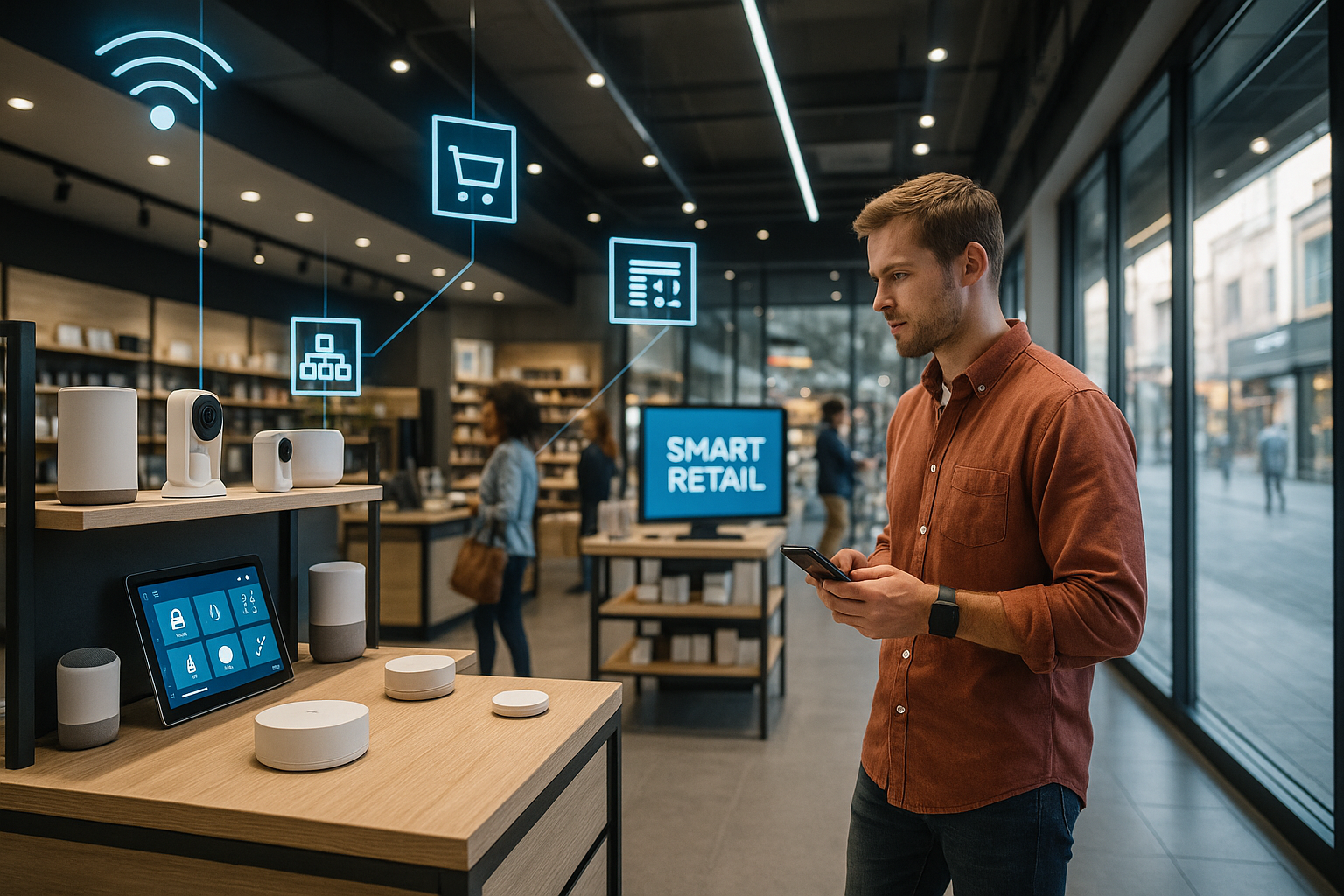
In an era where online commerce surges and consumer expectations evolve rapidly, traditional brick-and-mortar retailers face unprecedented challenges. Yet, embedded within these challenges lies an extraordinary opportunity: the Internet of Things (IoT). By connecting everyday objects—from inventory racks to shopping carts—to cloud-based intelligence, retailers can transcend static storefronts and craft dynamic, responsive environments that delight customers and streamline operations. This convergence of physical retail and digital intelligence, often termed the “smart store,” represents a paradigm shift. It blurs the line between online convenience and in-person experience, enabling retailers to personalize services, optimize resource utilization, and safeguard assets with a level of granularity never before possible.
This article delves into the transformative impact of IoT on retail, mapping its evolution from basic RFID tagging to sophisticated, end-to-end ecosystems that integrate sensors, data analytics, and automation. We’ll explore real-world applications—smart shelving that flags low stock in real time, beacons that tailor offers based on shopper location, and predictive maintenance that keeps refrigeration units running without interruption. Along the way, we’ll unpack the technologies underpinning IoT in retail, examine the operational and security challenges retailers must address, and peer into the horizon to see what lies ahead for the industry’s most innovative pioneers.
The Evolution of Retail Technology
Retail has always been at the forefront of adopting new technologies—from barcodes and point-of-sale systems to self-checkout kiosks. Yet those advancements primarily targeted labor savings and transaction speed. IoT ushers in a new dimension: continuous, networked intelligence that spans the entire customer journey and supply chain lifecycle.
Early Automation and RFID (1990s – 2000s):
Introduction of barcode scanners and point-of-sale terminals automated checkout and inventory. The rise of RFID tags allowed passive tracking of pallets and high-value items.
Mobile Integration and Analytics (2010s):
Retailers began leveraging mobile apps for loyalty programs and digital coupons. Big data analytics traced customer behavior across channels, but integration with in-store operations remained limited.
IoT-Driven Smart Stores (2020s – Present):
Sensors, beacons, and smart fixtures create real-time visibility into shopper habits, inventory status, and store conditions. Edge computing enables on-premises data processing for rapid decision-making, reducing latency and dependence on remote cloud services.
Through these stages, the role of data has shifted—from batch-processed sales figures to live feeds that inform every aspect of retailing, from merchandising to maintenance.
Core IoT Components in Modern Retail
An end-to-end IoT deployment in retail hinges on several foundational components working in concert:
Sensors and Actuators:
- Smart Shelves: Weight and proximity sensors detect when products are removed or low in stock, triggering restock alerts.
- Environmental Monitors: Temperature, humidity, and air-quality sensors ensure product integrity in perishable goods sections.
Connectivity Infrastructure:
- Wireless Protocols: Wi-Fi 6, Bluetooth Low Energy (BLE) beacons, and LPWAN (e.g., LoRaWAN) provide flexible coverage for dense store environments.
- Edge Gateways: Local hubs aggregate sensor data, perform initial processing, and relay critical events to cloud platforms or on-site servers.
Data Processing and Analytics:
- Cloud Platforms: Centralized data lakes store and process large volumes of telemetry, sales, and customer engagement data.
- Edge Analytics: Machine-learning models at the edge classify events—such as detecting suspicious patterns indicating potential theft—without relying on constant cloud connectivity.
Integration with Business Systems:
- ERP and Inventory Management: Real-time IoT data feeds ensure that back-end systems reflect current stock levels, automating purchase orders and logistics.
- CRM and Marketing Automation: Location-based triggers and loyalty data personalize promotions in real time as customers browse the store.
User Interfaces and Actuation:
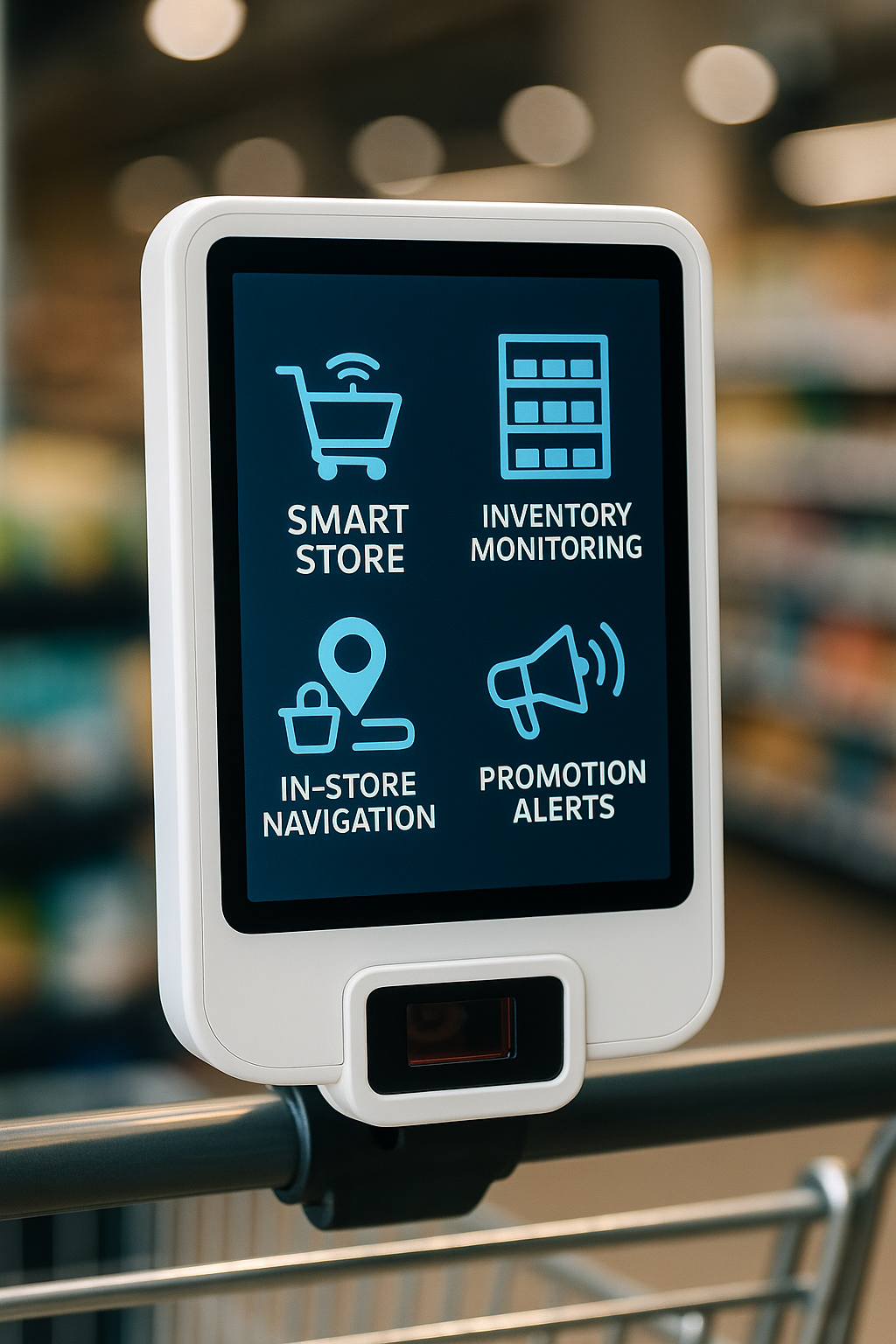
- Digital Signage: Displays update dynamically to reflect sales, product recommendations, or wayfinding directions based on current store conditions.
- Mobile Apps and Chatbots: Offer personalized assistance, in-aisle navigation, and voice-activated search for products on demand.
By weaving these components into a unified fabric, retailers achieve unprecedented transparency and control—transforming passive stores into intelligent, responsive environments.
Key Use Cases
Smart Shelves and Automated Replenishment
Challenge: Manual inventory counts are labor-intensive, error-prone, and often reactive—stockouts only become apparent when customers encounter empty shelves.
IoT Solution:
- Weight Sensors: Embedded into shelf panels, weight sensors detect changes down to single units.
- RFID/Camera Integration: Optical systems confirm item identities, reducing false alerts.
- Automated Alerts: When stock drops below predefined thresholds, the system notifies staff or triggers robotic restock units in advanced deployments.
Benefits:
- Stock Accuracy: Near 100% visibility into stock levels.
- Reduced Shrinkage: Immediate detection of unexpected item removal.
- Labor Optimization: Staff spend less time on manual checks and more on customer service.
Personalized In-Store Experiences
Challenge: Online retailers excel at personalization through browsing history and preference profiling; physical stores lack comparable context.
IoT Solution:
- BLE Beacons: Detect a customer’s position and compare against CRM profiles.
- Digital Signage & Mobile Notifications: Surface product recommendations, coupons, or loyalty rewards tailored to individual preferences and purchase history.
- Smart Mirrors: In fitting rooms, augmented reality mirrors suggest complementary items without physical trials.
Benefits:
- Enhanced Engagement: 20–30% lift in conversion rates as customers receive relevant offers.
- Cross-Sell/Upsell Opportunities: Real-time suggestions at critical decision points.
- Data Collection: Granular insights into dwelling times and product interactions.
Dynamic Pricing and Promotion
Challenge: Static pricing fails to account for real-time factors such as traffic, inventory glut, or local events.
IoT Solution:
- Environmental & Traffic Sensors: Measure footfall, queue lengths, and competitor pricing scraped via public APIs.
- AI-Driven Pricing Engines: Adjust shelf-edge prices and digital displays automatically to optimize margins or clear slow-moving stock.
Benefits:
- Revenue Optimization: Price adjustments aligned with demand elasticity and inventory goals.
- Agility: Rapid response to flash sales, weather changes, or unexpected surges.
Predictive Maintenance of Critical Equipment
Challenge: Equipment failures—refrigeration units, HVAC systems, elevator lifts—can disrupt operations and drive up repair costs when addressed only after breakdowns.
IoT Solution:
- Vibration and Temperature Sensors: Monitor motors, compressors, and bearings for early signs of wear.
- Historical Data Analysis: Machine learning models correlate sensor anomalies with probable failure modes.
- Automated Work Orders: Trigger maintenance tickets before outages occur.
Benefits:
- Downtime Reduction: Up to 80% fewer emergency repairs.
- Cost Savings: Preventive fixes are 30–50% less expensive than emergency replacements.
- Extended Equipment Life: Proactive care prolongs asset longevity.
Underlying Technologies
Edge Computing:
Because latency and reliability are critical in-store, many retailers push intelligence closer to the source:
- On-Premises Analytics: Simple anomaly detection and decision logic (e.g., door-open alarms) run at the edge.
- Offline Resilience: Stores maintain core functionality—even with Internet outages—by relying on local microdata centers.
AI and Machine Learning:
At the heart of intelligent retail are algorithms that learn from streams of sensor and transaction data:
- Computer Vision: Cameras combined with deep-learning models track customer flows, identify dwell areas, and detect safety hazards.
- Natural Language Processing: Voice assistants guide customers and record feedback on product preferences.
- Reinforcement Learning: Automated robots or automated guided vehicles (AGVs) optimize restock routes in real time.
Digital Twins:
Leading retailers build digital replicas of physical stores:
- Virtual Simulation: Test layout changes, product placements, and staffing plans in a risk-free environment.
- Real-Time Sync: Live sensor data mirrors store conditions, enabling “what-if” analyses for marketing campaigns or store redesigns.
Blockchain for Supply Chain Transparency:
While not strictly IoT, blockchain can securely log sensor-verified events:
- Provenance Tracking: Record temperature, humidity, and location from farm to storefront for perishable and high-value items.
- Immutable Records: Enhance customer trust and meet regulatory requirements in industries like pharmaceuticals or fine foods.
Implementation Roadmap
Phase 1: Foundation and Connectivity
- Network Assessment: Ensure robust Wi-Fi, LAN, and IoT-specific wireless infrastructure.
- Sensor Deployment Pilot: Install smart shelves and environmental monitors in a single store region.
- Data Platform Selection: Evaluate edge gateways and cloud providers, prioritizing retail-ready services.
Phase 2: Core Use Case Rollout
- Automated Replenishment: Extend smart-shelf solution across high-traffic locations.
- Customer Engagement Tools: Integrate BLE beacons and test personalized offers via mobile apps.
- Staff Training: Educate store associates on interpreting IoT dashboards and alerts.
Phase 3: Advanced Analytics and Automation
- Predictive Maintenance: Deploy equipment-monitoring sensors and link to maintenance workflows.
- Computer Vision Trials: Pilot camera-based analytics for queue management and safety monitoring.
- Digital Twin Creation: Build virtual models for A/B testing of store layouts and promotional strategies.
Phase 4: Ecosystem Optimization
- Supply Chain Integration: Extend IoT tracking upstream to warehouses and logistics partners.
- Dynamic Pricing Engine: Link sensor data, footfall analytics, and competitor APIs to drive real-time pricing.
- Full-Scale Rollout: Standardize IoT deployments across all regions, creating a unified management console.
Benefits and ROI
Operational Efficiency
Labor Savings: Automated inventory counts can reduce manual labor hours by 60–70%.
Energy Management: IoT-enabled HVAC and lighting controls cut energy consumption by up to 20%.
Revenue Growth
Up-Sell/Cross-Sell Uplift: Personalized in-aisle prompts can increase basket sizes by 15–25%.
Reduced Stockouts: Smart replenishment minimizes out-of-stock rates, boosting sales continuity.
Enhanced Security and Loss Prevention
Real-Time Alerts: Combined sensor and video analytics detect suspicious behavior instantly.
Shrink Reduction: Stores report up to 30% lower shrinkage when IoT-driven loss prevention is implemented.
Customer Experience and Loyalty
Seamless Journeys: From frictionless checkout to tailored service, IoT creates memorable interactions that drive repeat visits.
Data-Driven Insights: Loyalty programs evolve based on actual in-store behavior, deepening customer relationships.
When calculated across large store networks, these gains yield compelling ROI—often with payback periods under 18 months for end-to-end IoT transformations.
Challenges and Considerations
Data Security and Privacy
Vulnerability Surface Area: Thousands of connected endpoints increase risk vectors; robust device authentication and network segmentation are critical.
Compliance: Retail IoT must adhere to regulations such as PCI DSS for payment data, as well as data-privacy laws (e.g., CCPA, GDPR) when tracking customer movements.
Interoperability and Standards
Legacy Systems: Integrating IoT with existing POS and ERP infrastructure can be complex; middleware and open standards are key to smooth adoption.
Vendor Fragmentation: With myriad hardware vendors, retailers need clear roadmaps and preferred-supplier frameworks to avoid dead-end technologies.
Scalability
Network Capacity: As IoT device counts grow into the tens of thousands per location, network bandwidth and latency planning become mission-critical.
Device Management: Over-the-air firmware updates, health monitoring, and lifecycle tracking are essential to sustain large deployments.
Change Management
Staff Adoption: Associates and managers must understand IoT alerts and dashboards—comprehensive training programs are indispensable.
Organizational Alignment: IoT strategies should be co-owned by IT, operations, marketing, and finance teams to align incentives and budgets.
By anticipating these hurdles and embedding best practices—such as zero-trust network architectures, unified device platforms, and cross-functional IoT governance—retailers can mitigate risk and speed time to value.
The Future of IoT in Retail
Autonomous Stores
- Cashierless Checkouts: Combining computer vision, weight sensors, and account linking to enable fully automated purchase experiences.
- Robotic Assistants: On-floor robots guide customers, restock shelves, and sanitize high-touch areas without human supervision.
Hyper-Personalization at Scale
- Emotion Detection: AI algorithms interpret facial expressions (with consent) to gauge satisfaction and adapt offers in real time.
- Predictive Fulfillment: IoT data predicts shopping patterns, triggering pre-emptive curbside pickup readiness as customers approach.
Sustainable and Circular Retail
- IoT-Enabled Reverse Logistics: Smart packaging tags facilitate automated returns processing and track product lifecycles for recycling initiatives.
- Energy-Smart Buildings: Integrated building management systems dynamically optimize lighting, climate, and water usage based on occupancy trends.
Connected Ecosystems
- Omnichannel Synchronization: Live inventory and customer engagement data unify online, mobile, and in-store channels for seamless experiences.
- Partner Integrations: Retailers share anonymized IoT data with logistics providers, enabling synchronized replenishment and faster delivery windows.
As technologies like 5G, AI accelerators at the edge, and distributed ledger networks mature, IoT will become more autonomous, resilient, and privacy-centric—redefining retail spaces as intelligent hubs that blend commerce, community, and convenience.
The Internet of Things is not merely an add-on for forward-thinking retailers; it is the very backbone of the smart store vision. By embedding sensors, intelligence, and connectivity into every fixture and process, retailers unlock new realms of efficiency, security, and customer engagement. From ensuring shelves never go empty to delivering hyper-personalized experiences that delight visitors, IoT reimagines what retail can be—dynamic, data-driven, and delightfully human at its core.
However, success demands more than technology purchases. It requires a holistic strategy: robust network architectures, scalable device management, airtight security, and cross-disciplinary collaboration that unites IT, operations, marketing, and finance. For those who embrace IoT thoughtfully—from piloting smart shelving to crafting digital twins of their stores—the payoff is profound: resilience in the face of digital disruption, operational excellence that lowers costs, and customer experiences that stand out in an increasingly connected world.
As the lines between physical and digital retail continue to blur, IoT stands as the keystone that binds them—propelling brick-and-mortar beyond mere transactions into immersive, intelligent environments that inspire loyalty and foster sustained growth. Retailers who act now to integrate IoT holistically will not only survive the next wave of industry transformation but will emerge as the architects of a new retail frontier.