Space Farming: Cultivating Agriculture Beyond Earth
Published on: November 9, 2024
Agriculture is the backbone of civilization, providing the resources necessary to sustain human life on Earth. But as humanity looks beyond our home planet, we face a fundamental question: how do we grow food in the harsh conditions of space? The future of agriculture isn't just about optimizing crop yields on Earth—it's about extending our reach into space to cultivate food beyond our world. Space farming, an emerging field at the intersection of agriculture, technology, and exploration, offers the potential to solve some of the most complex challenges associated with long-duration space travel and extraterrestrial colonization.
The Need for Space Farming
As human exploration extends to Mars, the Moon, and beyond, developing reliable ways to produce food in space becomes critical. Space farming isn't just about growing a few leaves of lettuce on a spacecraft; it's about establishing sustainable ecosystems capable of providing food, oxygen, and even clean water for astronauts. Traditional methods of transporting all the necessary food from Earth are costly and logistically challenging, especially for missions lasting several months or even years. Therefore, the idea of cultivating fresh food in space—whether on a space station, a lunar base, or eventually on Mars—is an appealing solution.
NASA and other space agencies have long recognized the importance of in-situ resource utilization (ISRU), a concept that involves using available resources in a specific environment to support mission needs. Space farming represents a form of ISRU that addresses both logistical and psychological challenges of long-term space missions, ensuring astronauts have access to nutritious food and contributing to their overall well-being.
Challenges of Growing Food in Space
Farming on Earth is challenging enough, with climate change, pests, and resource limitations complicating crop production. In space, these challenges are amplified by a lack of gravity, intense radiation, and confined growing environments. Space farming has to overcome a host of problems:
Microgravity and Plant Growth
On Earth, gravity helps plants orient themselves—roots grow down, and stems grow up. In the microgravity of space, plants experience disorientation. Roots can grow in random directions, making it difficult for them to obtain water and nutrients effectively. Researchers have been experimenting with how plants perceive gravity and what adaptations are needed to grow in microgravity.
NASA's Veggie experiment, which has been tested on the International Space Station (ISS), demonstrated that leafy greens like lettuce could successfully grow in microgravity using special pillows filled with growth medium. However, microgravity impacts plant growth and physiology in ways that are not yet fully understood, and optimizing these growth patterns is an ongoing area of research.
Radiation Exposure
Beyond Earth's protective magnetosphere, plants are exposed to high levels of cosmic radiation, which can damage their DNA and hinder growth. Radiation poses one of the biggest challenges for space farming, especially during long-term missions to Mars. Shielding plants from radiation or developing radiation-resistant plant varieties may be necessary to ensure successful crop production in deep space.
Limited Resources
Water, nutrients, and space are scarce on a spacecraft or planetary habitat. Unlike on Earth, where water cycles naturally, in space, water must be recycled and used with maximum efficiency. Advanced irrigation methods, such as hydroponics and aeroponics, are ideal for this environment. These soil-less growing techniques enable precise control of water and nutrient delivery, minimizing waste and optimizing growth.
Hydroponics, for instance, allows plants to grow in a nutrient-rich solution instead of soil. This method significantly reduces water consumption, which is crucial for space missions where every drop of water is precious.
Innovations in Space Farming
Hydroponics and Aeroponics
Hydroponics and aeroponics are crucial technologies for space farming, allowing for efficient water and nutrient use. Aeroponics, in particular, involves misting plant roots with nutrient solutions, providing an even greater reduction in water use compared to hydroponics. Both methods are well-suited for microgravity environments since they do not require soil and can be easily adapted to different growing conditions.
These techniques are already being implemented in terrestrial farming to increase efficiency and reduce water use, especially in regions with limited arable land or water scarcity. The same technologies could be further refined to work in extraterrestrial environments, providing sustainable solutions for growing crops beyond Earth.
Artificial Intelligence and IoT Integration
Artificial Intelligence (AI) and the Internet of Things (IoT) are poised to play a major role in optimizing space farming. The harsh environment of space means that even minor issues in a crop-growing system could lead to significant losses. AI can be used to monitor plant health, predict potential issues, and optimize growing conditions in real time.
IoT sensors can provide continuous data on humidity, temperature, light levels, and nutrient concentrations. Using this data, AI algorithms can adjust growth conditions as needed, ensuring optimal plant health and maximizing yields. Such an automated approach is especially valuable in space, where human intervention is limited, and precision is crucial.
Genetic Engineering for Space-Ready Crops
Genetic engineering can help make plants more resilient to the stresses of space farming. By modifying certain genes, scientists are working to develop crop varieties that can better withstand microgravity, radiation, and limited water availability. For instance, some plants have been genetically modified to grow faster or produce higher yields, making them ideal candidates for cultivation in space.
CRISPR, a powerful gene-editing technology, could play a pivotal role in creating crops specifically designed for space. Traits such as radiation resistance, nutrient efficiency, and compact growth could be enhanced using CRISPR, paving the way for crops that are ideally suited to the challenging conditions of extraterrestrial agriculture.
From ISS to the Moon: Testing Grounds for Space Agriculture
The International Space Station (ISS) has been a testbed for space farming for years. Experiments like Veggie and Advanced Plant Habitat have provided valuable insights into how plants grow in space and what challenges need to be addressed. Fresh food, such as lettuce and radishes, has been successfully grown and consumed by astronauts, offering a glimpse of what future space farming might look like.
The next logical step is to expand these efforts to the Moon. NASA's Artemis program aims to establish a sustainable human presence on the Moon, with plans to use lunar resources, including growing food in lunar habitats. The Moon, with its reduced gravity and harsh environment, presents an opportunity to refine the technologies and methods that will eventually be used for Mars colonization.
Space Farming on Mars: Preparing for Human Settlement
Mars is the ultimate goal for human colonization, and farming on Mars presents both challenges and opportunities. The Martian atmosphere is thin, composed mostly of carbon dioxide, and the surface experiences extreme temperature fluctuations. However, the planet's surface has water ice, and its regolith (soil) could potentially be used as a growth medium with some modifications.
Greenhouse Concepts for Mars
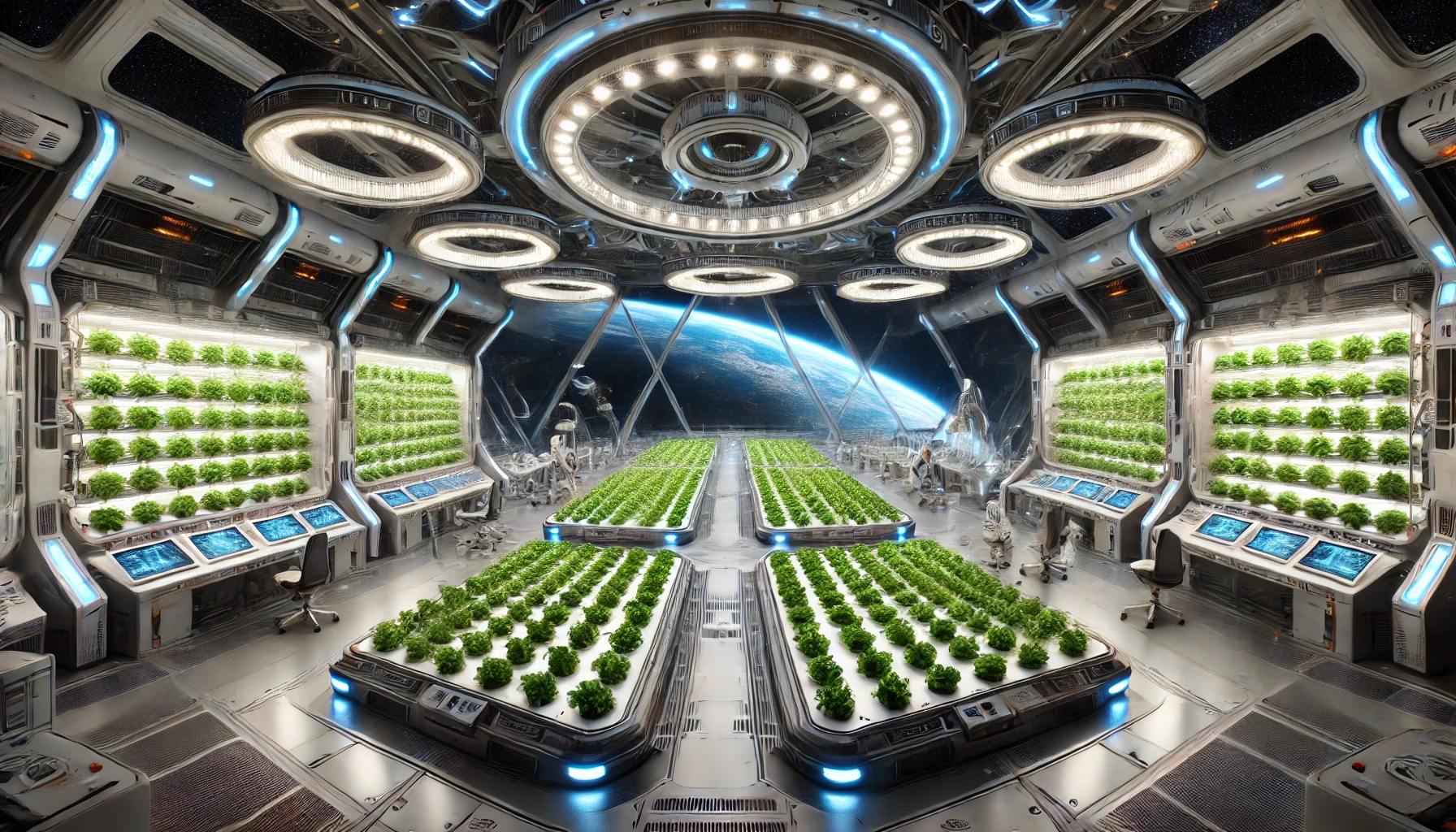
Greenhouses on Mars would need to be highly controlled environments, capable of maintaining temperature, humidity, and light conditions suitable for plant growth. These greenhouses would need to shield plants from harmful radiation while allowing enough sunlight to support photosynthesis. Researchers are exploring the use of inflatable greenhouses and underground farming to protect crops from radiation.
LED lighting, which has been successfully used in space farming on the ISS, could supplement natural sunlight, providing the necessary light spectrum for optimal plant growth. Advanced greenhouse designs could also incorporate water recycling systems, nutrient delivery systems, and environmental control systems to create a self-sustaining ecosystem.
Soil and Nutrient Challenges
The Martian regolith is not naturally fertile and contains toxic compounds like perchlorates. To make it suitable for farming, scientists are exploring ways to remove these toxic elements or use hydroponic systems with nutrient-rich solutions instead of relying on Martian soil. The presence of carbon dioxide in the Martian atmosphere is a benefit, as it can be used by plants for photosynthesis, but other challenges, such as the lack of nitrogen and phosphorus, must be addressed.
Research into using microbes to improve Martian soil fertility is also ongoing. By introducing bacteria that can fix nitrogen or break down perchlorates, it may be possible to make Martian soil more suitable for agriculture, further contributing to the goal of self-sustaining human colonies on Mars.
Psychological Benefits of Space Farming
Growing food in space offers significant psychological benefits for astronauts. The monotony of space travel and the isolation of long-term missions can have adverse effects on mental health. Space farming provides a connection to Earth and a sense of responsibility and purpose. The sight of greenery, the act of nurturing plants, and the availability of fresh food can all improve mood and reduce stress, contributing to the overall well-being of the crew.
The role of plants as a source of comfort is well-documented. The presence of green, living things has been shown to reduce stress, improve productivity, and enhance mental health on Earth. The same principles apply in space, where the benefits of growing and interacting with plants can make a significant difference in the psychological health of astronauts.
Terrestrial Applications: Bringing Space Farming Back to Earth
The technologies developed for space farming have the potential to transform agriculture on Earth. Hydroponics, aeroponics, AI, and IoT systems used for growing food in space can be adapted to urban agriculture, vertical farming, and sustainable food production here on our planet. As the global population continues to grow, the need for efficient, sustainable farming practices is more important than ever.
Vertical Farming
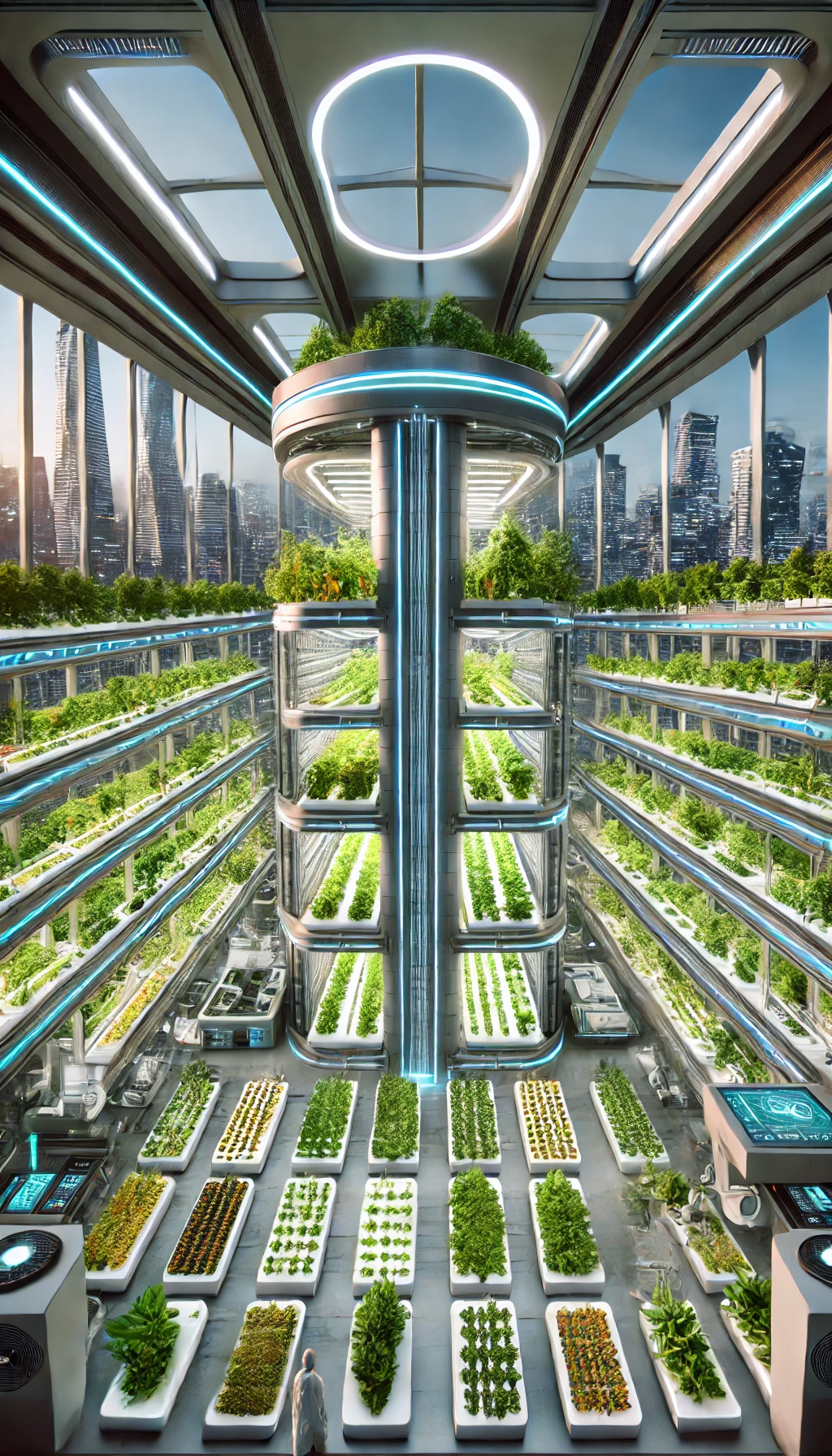
Vertical farming, which involves growing crops in stacked layers, often in controlled indoor environments, borrows heavily from space farming techniques. With a focus on maximizing yield in a limited area, vertical farming utilizes hydroponics and advanced lighting to produce food in urban areas, reducing the need for arable land and transportation costs. The closed-loop systems developed for space farming, which recycle water and nutrients, are also being employed in vertical farms to create sustainable food production.
Urban Agriculture
Urban agriculture can benefit from the compact, efficient systems developed for space. Rooftop gardens, community greenhouses, and even small-scale home farming can utilize hydroponic and aeroponic technologies. By integrating AI and IoT into urban agriculture, it becomes possible to monitor and manage plant health, water usage, and nutrient levels remotely, ensuring that urban farming is as productive and resource-efficient as possible.
Climate-Resilient Farming
The same technologies that help crops grow in the harsh conditions of space can also make terrestrial farming more resilient to climate change. By using controlled environments, hydroponics, and precision farming technologies, it is possible to grow food in regions affected by drought, soil degradation, or extreme temperatures. AI and IoT systems, which optimize growing conditions based on real-time data, can help farmers adapt to changing climate conditions and maintain productivity even in challenging environments.
The Future of Space Farming
The future of space farming is incredibly promising, with numerous initiatives underway to advance our understanding of how to grow food beyond Earth. NASA, the European Space Agency (ESA), and private companies like SpaceX and Blue Origin are all investing in research to develop space farming technologies that will support long-duration space missions and human settlement on other planets.
One exciting possibility for future space farming involves bio-regenerative life support systems (BLSS), where plants, algae, and microorganisms work together to create a closed-loop system. In a BLSS, plants provide oxygen and food while absorbing carbon dioxide, creating a self-sustaining environment that supports human life. These systems could eventually be used in lunar or Martian bases, providing all the resources needed to sustain life for extended periods without resupply from Earth.
Another area of research involves using fungi to support space farming. Fungi, such as mycorrhizal fungi, form symbiotic relationships with plant roots, helping them absorb nutrients more effectively. Introducing fungi into space farming systems could improve nutrient uptake and increase crop yields, making space farming more efficient.
Cultivating the Final Frontier
Space farming represents a crucial step in humanity's journey to explore and settle other planets. By developing the technologies needed to grow food in space, we are not only ensuring that astronauts have access to fresh, nutritious food but also laying the groundwork for future space colonies. The innovations in hydroponics, AI, IoT, and genetic engineering developed for space farming are already finding applications here on Earth, offering new ways to produce food sustainably and efficiently.
As we look to the stars, the importance of agriculture cannot be overstated. Space farming is about more than just growing food—it's about creating a future where humanity can thrive beyond Earth, sustained by the technologies and practices that will allow us to cultivate the final frontier. With every experiment conducted on the ISS, every greenhouse concept designed for Mars, and every crop that grows in microgravity, we are getting closer to a future where space farming is a reality and the dream of living among the stars becomes achievable.