Table of Contents
- The Evolution of Home Automation
- ▶ Key Components of an Automated Interior
- ▶ Core Benefits of Automated Interiors
- ▶ Privacy and Security Considerations
- Interoperability and Standards
- ▶ Practical Use Cases and Scenarios
- ▶ Overcoming Challenges in Automated Interiors
- ▶ Designing for the Future
- ▶ Implementation Strategies: From Planning to Execution
- ▶ Looking Ahead: The Broader Impacts
- The Future of Smart Living
Automated Interiors: The Next Frontier in Smart Home Living
Published on: March 15, 2025
The concept of home automation has long been tied to simpler conveniences such as automated lighting, thermostats, and virtual assistants. However, as technology advances, we are beginning to see a far more radical transformation of living spaces: automated interiors. This trend involves the seamless integration of furniture, appliances, and architectural elements that can adapt to different needs, preferences, and times of day at the touch of a button—or even automatically, through sensor-based intelligence. These new solutions go well beyond the typical “smart home” features of the past decade and usher in a new era of dynamic living environments, where walls can retract, furniture can rearrange itself, and robotic systems can take on daily tasks.
In this article, we delve into the world of automated interiors, exploring how advanced robotics, IoT connectivity, and purposeful design are transforming the way we live. You’ll learn about the different types of automated furniture, how real-time data collection enables more efficient spaces, the privacy and security considerations that come with heavily connected systems, and the breakthroughs on the horizon that promise to push this field even further. Whether you’re a homeowner, design enthusiast, or technology professional, understanding the possibilities and challenges of automated interiors can offer valuable insights into the future of smart living.
The Evolution of Home Automation
From Convenience to Transformation
When home automation began, it was largely about convenience: turning lights on and off with a schedule, adjusting thermostats remotely, or receiving notifications on your phone if you left the garage door open. These convenience-based features have matured significantly over the past decade. Now, with Internet of Things (IoT) technologies, smartphones, and robust connectivity, the scope of home automation extends beyond convenience into transformative redesign of living spaces.
Today, we’re witnessing automated solutions that go further than simple one-click commands. By harnessing advanced sensors (such as proximity, temperature, humidity, occupancy, and motion), and coupling them with AI-based analytics, smart homes can dynamically adapt to day-to-day changes in occupancy, lifestyle patterns, and personal preferences. As a result, living environments become truly responsive—able to alter layout, function, and even ambiance without requiring user intervention.
The Rise of Automated Interiors
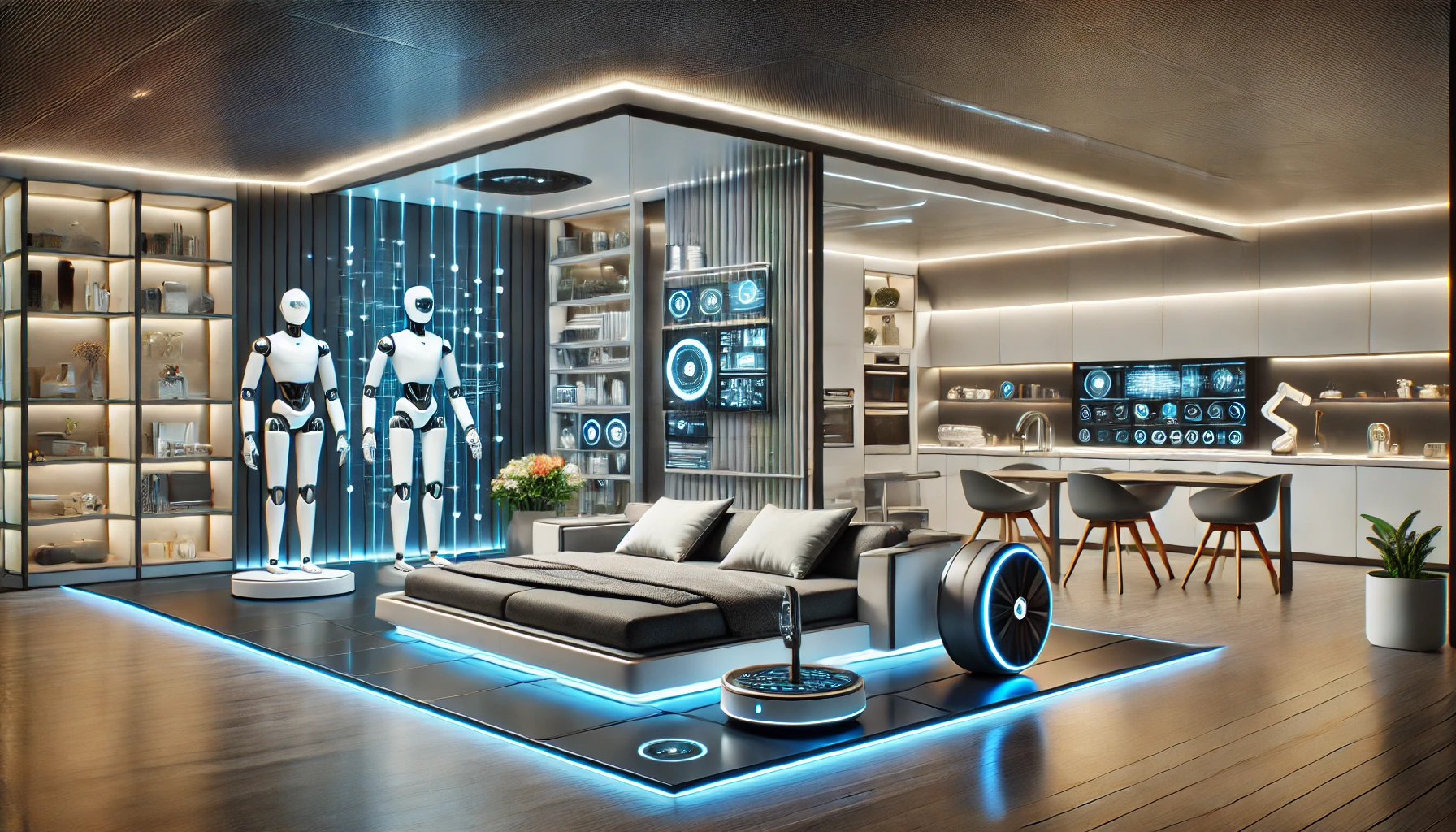
Automated interiors mark a significant leap from turning on a light via a voice assistant to physically transforming a room’s layout in seconds. This shift includes:
- Robotic furniture that can extend or retract on command, such as foldable beds that seamlessly disappear into the wall during the daytime, opening up floor space.
- Retractable walls or partitions that can add or remove privacy, or modify the size of a room according to need.
- Adaptive lighting and shading that automatically changes in response to external weather conditions, occupant preferences, and circadian rhythms.
- Autonomous cleaning robots that are integrated into the home’s design, docking discreetly in cabinetry or hidden compartments.
In essence, these technologies unify the worlds of architecture, design, and advanced electronics, creating a unified, holistic approach to living space that adjusts fluidly with daily life.
Key Components of an Automated Interior
Robotic Furniture
Robotic furniture constitutes some of the most visually impressive examples of automated interiors. These systems typically rely on carefully engineered actuators, hinges, and tracks that allow pieces of furniture—beds, tables, couches, shelves—to move along pre-set paths.
- Murphy Beds 2.0: Unlike the classic Murphy bed that is manually folded against the wall, next-gen models can raise or lower themselves with the press of a button, or automatically based on time of day or occupancy data.
- Transformable Coffee Tables: Imagine a coffee table that can transform into a dining table capable of seating multiple guests, or shrink back down when you’re finished.
- Robotic Sofas: With modular cushion designs and embedded motors, these sofas can shift into recliners, daybeds, or standard seating arrangements—sensing user positions for optimum comfort.
Behind the elegance of motion are advanced safety features designed to detect obstructions, ensure no occupant or pet is harmed, and maintain mechanical reliability over thousands of cycles.
Automated Partitions and Walls
An automated partition or retractable wall system allows a homeowner to split a large living room into two smaller spaces or open up an entire floor in just a few seconds. By leveraging motorized tracks, mechanical arms, or rotating panels, these partitions can provide:
- Privacy on demand: Perfect for shared living spaces or multi-generational homes where flexible use of space can be crucial.
- Noise isolation: Certain systems come with insulating materials, providing acoustic dampening for home offices or entertainment spaces.
- Space optimization: By altering the layout as needed, smaller apartments can transition from a spacious living room during the day to a cozy bedroom at night, or from a quiet reading nook to a small home office.
Sensor Networks and AI Integration
In the realm of automated interiors, sensors gather the data that guides the transformations. Passive infrared sensors can detect occupancy, temperature sensors gauge climate control needs, and humidity sensors track air quality. All these readings are fed into an AI-based central system (or distributed microcontrollers) that orchestrates each component according to user preferences and contextual factors, such as time of day, season, or personal schedule.
By learning from daily routines, these systems can anticipate occupant behaviors. For instance, an AI might lower a retractable bed automatically around bedtime, or move a partition to enlarge a kitchen area before dinner. This synergy of data-driven intelligence, mechanical engineering, and architectural design is the foundation of truly self-adjusting interiors.
Next-Generation Appliances
Beyond walls and furniture, a range of robotic or semi-robotic appliances can further unify the automated interior concept:
- Robotic chefs or advanced cooking assistants that handle repetitive tasks such as stirring, chopping, or cleaning up.
- Automated refrigerators that track inventory, expiration dates, and user dietary preferences.
- Laundry and wardrobe management solutions that automate clothes sorting, folding, and even retrieval.
When integrated within a broader system, these appliances share data—e.g., the fridge can communicate with the robotic chef about available ingredients, or a closet system might rearrange clothing items for easy access based on personal schedules.
Core Benefits of Automated Interiors
Space Optimization
In urban environments where space is at a premium, having a single room that functions effectively as a living room, dining area, and office can be a game-changer. Automated furniture ensures that every square foot is used efficiently, freeing up valuable floor area when items are not in use. This can reduce the need for larger homes, directly translating into cost savings on rent or mortgage, as well as heating and cooling.
Enhanced Aesthetics and User Experience
The fluid transformation of space not only serves a practical purpose but can also be visually stunning. Walls that glide effortlessly, coffee tables that expand gracefully, or seats that reconfigure themselves to your posture—these elements introduce a sense of futuristic elegance. Users get an immersive, high-tech experience, blending seamlessly with the broader concept of connected living.
Moreover, an integrated system that harmonizes lighting, temperature, and even music with the newly transformed room layout can add a profound sense of ambiance. For instance, if you shift your living room into a home theater, the lighting may dim, curtains may close automatically, and your favorite streaming service might queue up on the big screen.
Efficient Energy Management
By monitoring occupancy, user preferences, and external weather conditions, an automated interior can adapt energy usage in real time. Systems can automatically lower blinds to reduce heat gain, shut off lights in unoccupied spaces, or leverage AI predictions to preheat or cool the house only when occupants are home. Integrating these capabilities with existing solar or battery systems can make a residence even more self-sustaining and cost-effective.
Improved Accessibility
For individuals with mobility challenges or special needs, an automated interior can be life-changing:
- Beds and seating that adjust height or angle automatically.
- Voice-activated partitions that remove the need to move furniture manually.
- Sensors that detect falls or unusual inactivity and alert caregivers or medical services.
By reducing physical barriers, automated interiors can make independent living a reality for many who might otherwise struggle with standard home designs.
Privacy and Security Considerations
While the seamless movement of partitions, robotic furniture, and sensor-based automation can be magical, it also raises significant privacy and security concerns.
Data Privacy
At the heart of an automated interior is a wealth of personal data: daily schedules, occupancy patterns, usage of specific furniture, and even personal behavioral cues. If these data streams are not adequately secured, they can become prime targets for cybercriminals or malicious actors. Potential issues include:
- Unauthorized Access: Hackers gaining control over the home’s automated systems, causing disruptions or orchestrating break-ins.
- Invasive Data Collection: Marketing companies might obtain sensitive information about occupant routines if data is sold or shared without informed consent.
- Location Tracking: Detailed logs of occupant movement could reveal when a home is empty, facilitating burglary or other unauthorized entry.
Physical Security
Physical security is equally critical. Consider a retractable wall or bed that can be triggered remotely—malicious manipulation could place individuals in danger by, for example, retracting furniture while it’s in use or blocking exits.
Strategies to mitigate risks include robust authentication protocols, encryption of all data in transit and at rest, intrusion detection systems that can sense anomalies in user control patterns, and fail-safes that revert to safe positions if suspicious commands are issued.
Maintaining Autonomy
An over-automated environment can diminish user autonomy if not carefully designed. Homeowners may feel overwhelmed if every action triggers a system reaction they did not explicitly request. Clear user interfaces, override mechanisms, and customizable automation rules help ensure occupants remain in control, enabling them to calibrate the degree of automation they find comfortable.
Interoperability and Standards
One of the biggest challenges facing the world of automated interiors is interoperability. With so many different manufacturers, protocols, and device ecosystems, ensuring that your robotic bed can communicate with your sensor arrays, or that your retractable walls can integrate with the same voice assistant controlling your lighting, can be complex.
Communication Protocols
Currently, many smart home devices rely on protocols such as Wi-Fi, Zigbee, Z-Wave, Bluetooth Low Energy, or proprietary solutions. For large, motorized pieces of furniture or advanced robotic systems, the reliance on low-latency, robust connections is critical for safety and performance. The ideal approach is often a local network that can continue to function even if the external internet connection is lost, ensuring user control and safety mechanisms remain intact.
Device Certification and Collaboration
Industry alliances and standards organizations (like the Connectivity Standards Alliance) aim to create guidelines so that multiple brands and manufacturers can produce interoperable products. A “seal of compatibility” from recognized bodies helps consumers identify which devices can seamlessly communicate, boosting user confidence. As automated interiors become more mainstream, we can expect more widespread certification programs that address not only connectivity but also mechanical safety and cybersecurity aspects.
Practical Use Cases and Scenarios
Micro-Apartments in Urban Centers
In densely populated cities, micro-apartments have become a necessity for many residents. Automated interiors can transform these tiny living spaces, making them more versatile and comfortable:
- A living room morphs into a bedroom at night, thanks to a retractable bed.
- Ceiling-mounted storage descends only when needed, clearing floor space the rest of the time.
- An automated partition can quickly divide the space for a temporary guest room or a private work area.
Residents thus enjoy the feeling of having multiple rooms in a space that might be less than 400 square feet.
Luxury Villas and Multi-Functional Spaces
High-end homes are also embracing automated interiors to create truly multi-functional living environments:
- Home theaters that transform from family living rooms.
- Gourmet kitchens that integrate with robotic arms for meal preparation, a retractable dining table for large gatherings, and hidden storage compartments that appear only when needed.
- Indoor-outdoor living where large glass panels open up automatically to extend the living room onto a patio or pool area, bridging nature and interior spaces seamlessly.
Elderly Care and Assisted Living
Communities and residences focused on senior living can significantly benefit from automated interiors:
- Height-adjustable furniture that offers safer transitions for those with mobility challenges.
- Sensors that detect irregular movements or potential falls, initiating quick alerts or emergency responses.
- Automatic medication dispensers integrated with a home’s system to provide gentle reminders, track dosage, and even notify healthcare providers if a dose is missed.
These capabilities not only enhance convenience but also prioritize well-being, reducing the burdens on caregivers and promoting independent living.
Office and Commercial Settings
Though this article focuses on residential applications, automated interiors have equally transformative potential in office and retail spaces:
- Corporate Offices: Meeting rooms with walls that can expand or contract based on event size. Desks that shift configurations to foster collaboration.
- Retail: Displays that physically move to showcase new products, or reconfigure store layouts to manage crowds and optimize traffic flow during peak hours.
Overcoming Challenges in Automated Interiors
Complexity vs. Usability
One significant barrier to widespread adoption is the technical complexity of integrated systems. While a motorized bed might be simple enough for an end user, bridging it with the broader automated interior for cohesive operation requires advanced control systems. Achieving a user-friendly experience that hides the underlying complexity is crucial.
Reliability and Maintenance
Moving parts, mechanical actuators, and motors introduce new points of failure. Unlike a static piece of furniture, which might remain functional for decades with minimal wear, a robotic bed or partition undergoes repetitive mechanical stress. Homeowners must consider:
- Regular maintenance schedules akin to automobile servicing, ensuring parts remain lubricated, clean, and properly aligned.
- Firmware updates for the system’s microcontrollers, sensors, and potentially cloud-based software that helps coordinate automation.
- Fail-safe mechanisms that lock or revert a system to a safe position if a fault is detected, preventing potential accidents.
Cost and Scalability
Currently, many advanced automated interior solutions remain in the premium or luxury market segments. The cost of specialized motors, engineering, and integrated electronics can be prohibitive for average consumers. Over time, economies of scale, improved manufacturing processes, and widespread adoption of standardized modules may bring costs down, making these systems more accessible.
Data Ownership and Ethical Implications
When an AI is collecting a near-constant stream of occupant data—activity patterns, usage of certain rooms, or personal preferences—questions of data ownership and ethical usage arise. Homeowners should have full transparency regarding what data is collected, how it’s used, and who has access to it. The proliferation of advanced analytics can lead to an environment where occupant behaviors are constantly monitored, raising fundamental questions about the balance between convenience and personal autonomy.
Designing for the Future
A Holistic Approach to Smart Living
The idea of an automated interior extends beyond just mechanical transformations. It intersects with lighting design, air quality control, digital entertainment, and even landscaping in connected homes. As we move forward, a holistic approach that integrates all these aspects—rather than treating them as stand-alone systems—will be key to realizing the full potential of smart living. Designers, architects, and technologists will increasingly collaborate to create dwellings where walls, floors, furniture, and devices form one coherent ecosystem, orchestrated by sophisticated software and powered by robust hardware.
Human-Centered Automation
A critical step toward widespread acceptance is ensuring that the technology is human-centered. While it’s exciting to have a home that changes shape according to AI algorithms, the occupant’s comfort, privacy, and emotional well-being should remain the guiding principles. This implies:
- User Interfaces: Intuitive designs that allow quick manual overrides and minimal friction in customizing settings.
- Ethical AI Practices: Prioritizing occupant consent, data minimization, and transparency in how decisions are made.
- Inclusive Design: Accommodating various user groups, including the elderly, children, and those with disabilities.
Potential Breakthroughs
Looking ahead, several breakthroughs could accelerate the pace of automated interior adoption:
- Advanced Materials: Integration of shape-memory alloys or advanced polymers may enable furniture and walls to transform quietly without the need for bulky motors or mechanical arms.
- Wireless Power: As wireless power transfer becomes more efficient, we may see fewer cables and complex wiring, making installations simpler, safer, and more flexible.
- AI-Driven Creativity: Instead of waiting for a user’s command, AI might propose new room layouts or furniture positions based on analyzing occupant behavior and environmental data, effectively becoming an in-home “designer” that proactively suggests changes.
- Mixed Reality Integration: Combining augmented or virtual reality with automated interiors could allow users to preview a new layout or design changes before physically implementing them, bridging the gap between conceptualization and real-world application.
Implementation Strategies: From Planning to Execution
Blueprint and Needs Analysis
Before diving into automated interiors, homeowners or developers should start with a needs analysis. What are the main goals? Are you focusing on saving space in a small apartment, or are you aiming for a cutting-edge showcase in a luxury home? Understanding these goals guides the design blueprint:
- Identify which furniture or walls are best suited for automation.
- Decide how many sensors you need and where they should be placed for optimal coverage.
- Determine the level of integration among different systems (e.g., security, lighting, climate control).
Collaborating with Experts
Because these systems often involve structural modifications, mechanical engineering, software programming, and design aesthetics, a multidisciplinary team is typically necessary. Architects or interior designers can ensure that the transformations blend into the home’s overall style, while robotics and electronics professionals handle the mechanics and control systems. A dedicated security expert can help integrate encryption, authentication layers, and network segmentation to safeguard the system.
Budgeting and Phased Installation
Costs can add up quickly, especially if you opt for high-end materials or fully custom solutions. Many homeowners find that phased installation is more practical, beginning with one or two key areas—like an automated bedroom or living room—before expanding to the entire house. This approach also allows for learning and adjustments, as real-world usage may reveal new requirements or preferences.
Ongoing Maintenance and Updates
Just like a car, an automated interior requires maintenance. This may include:
- Checking mechanical parts for wear and tear.
- Updating firmware on motors, sensors, and AI platforms.
- Ensuring your network is secure with up-to-date firewalls and patches.
By proactively maintaining the system, homeowners can extend the lifespan of expensive components and reduce the risk of failures or data breaches.
Looking Ahead: The Broader Impacts
Redefining Urban Architecture
As automated interiors become more widespread, we could see a shift in urban planning and architecture. Buildings might be constructed with pre-installed tracks, modular partitions, and load-bearing points that facilitate easy adoption of automated furniture and moving walls. City apartments could get smaller overall, relying on dynamic transformations to accommodate occupant needs throughout the day, potentially easing housing shortages in high-demand areas.
Sustainability and Environmental Gains
On a larger scale, if smaller living spaces become more viable through better space optimization, fewer resources may be consumed in constructing new housing. Additionally, the integrated energy management features could significantly reduce carbon footprints, as well-designed automated interiors often help reduce wasteful energy consumption by automatically adjusting lighting, heating, and cooling. Over time, entire neighborhoods built around such concepts might drastically minimize resource usage.
Cultural and Lifestyle Shifts
Some people will embrace the “morphing” home concept, while others might resist, preferring static living spaces. As with any technological shift, generational differences will play a role. Younger individuals may consider it normal to have rooms that physically reconfigure at the tap of a smartphone, whereas older generations may find the concept disorienting or intrusive. Over time, if automated interiors prove reliable and cost-effective, cultural norms will likely shift to view these features as standard in modern residences.
Emergence of New Professions and Services
The complexity of integrated systems will likely fuel growth in specialized sectors:
- Automation consultants to help design and deploy custom solutions.
- Maintenance and repair technicians focused on robotic furniture and partitions.
- Security experts dedicated to home IoT ecosystems.
- Interior designers who specialize in dynamic layouts and the aesthetics of transformative spaces.
This ecosystem of professionals would drive innovation, help standardize best practices, and create new career paths in home tech and design.
The Future of Smart Living
Automated interiors represent the next frontier of smart home living, pushing the boundaries well beyond connected light bulbs or thermostats. By leveraging IoT, AI, and mechanical engineering, our homes can dynamically adapt to our routines and needs, delivering unprecedented efficiency, comfort, and functionality. From space-saving solutions in micro-apartments to luxurious reconfigurable living areas in high-end villas, the versatility of automated interiors is poised to transform how we perceive and use our personal spaces.
Yet, along with these benefits come challenges—privacy, security, and complexity among them. As the technology matures, industry standards, robust privacy frameworks, and user-friendly interfaces will become critical to ensuring that we reap the rewards without surrendering autonomy or safety. Looking ahead, the integration of advanced materials, wireless power, and ethical AI could lead to even more radical transformations, potentially creating living environments that truly shape themselves around human life.
For homeowners, businesses, and enthusiasts alike, the future of Home Automation lies in cohesive, holistic designs that seamlessly integrate every aspect of a living environment. The era of automated interiors is only just beginning, and as it continues to evolve, we can anticipate a new paradigm in smart homes—one that merges advanced engineering with thoughtful design to offer flexible, intuitive, and delightful spaces for all.